
How Inflation Affects Stocks: Winners and Losers
Inflation is one of the most powerful forces shaping financial markets, yet it is also one of the most misunderstood. Investors often ask how inflation affects stocks and shares, whether inflation is good for stocks, and how rising prices change long-term returns. These questions become even more urgent during periods of elevated inflation, when consumer prices rise quickly and uncertainty spreads across markets.
Inflation affects stocks in complex ways. It changes costs for businesses, alters consumer behavior, influences interest rates, and reshapes how investors value future earnings. Some companies benefit from inflation, while others struggle. Understanding these differences helps investors protect their portfolios and identify opportunities.
This article explains how inflation affects stocks, examines winners and losers, and explores inflation’s impact on stock returns using clear economic logic rather than headlines. The discussion stays descriptive and analytical, written entirely in the third-person perspective.
Understanding inflation in economic terms
Inflation refers to the general increase in prices over time. When inflation rises, each unit of money buys fewer goods and services than before. Governments and statistical offices measure inflation using price indices such as the consumer prices index and the retail prices index.
In many countries, official inflation data comes from national statistics offices. These organizations publish datasets, time series, and monthly figures showing how prices change across categories such as food, housing, services, and goods. Measures like CPI, CPIH, and RPI track price movements over months and years, often expressed as a 12-month rate or annual inflation rate.
For investors, inflation is not just a statistic. It directly affects corporate profits, household spending, interest rates, and ultimately stock prices.
How inflation affects the stock market at a broad level
At a broad level, inflation affects the stock market by changing expectations about future cash flows and discount rates. Stocks represent claims on future earnings. When inflation rises, the value of those future earnings may change in two opposing ways.
On one hand, higher prices can increase company revenue if firms can pass rising costs on to consumers. On the other hand, inflation often leads to higher interest rates, which reduce the present value of future profits. The balance between these forces determines whether inflation helps or hurts stocks overall.
This tension explains why the impact of inflation on the stock market is rarely uniform. Different sectors respond differently depending on pricing power, cost structure, and sensitivity to interest rates.
How inflation affects stocks and shares through earnings
Earnings sit at the center of the relationship between inflation and stocks. Inflation affects both revenue and costs, but not always equally.
Companies with strong pricing power can raise prices alongside inflation. For these firms, revenue may grow faster than costs, leading to stable or even expanding profit margins. Other companies face rising input costs without the ability to raise prices, causing margins to shrink.
This divergence is why inflation creates clear winners and losers in the stock market rather than moving all stocks in the same direction.
Inflation and valuation: the role of discount rates
One of the most important channels through which inflation affects stocks is valuation. When inflation rises, central banks often respond by increasing interest rates. Higher rates raise the discount rate used to value future earnings.
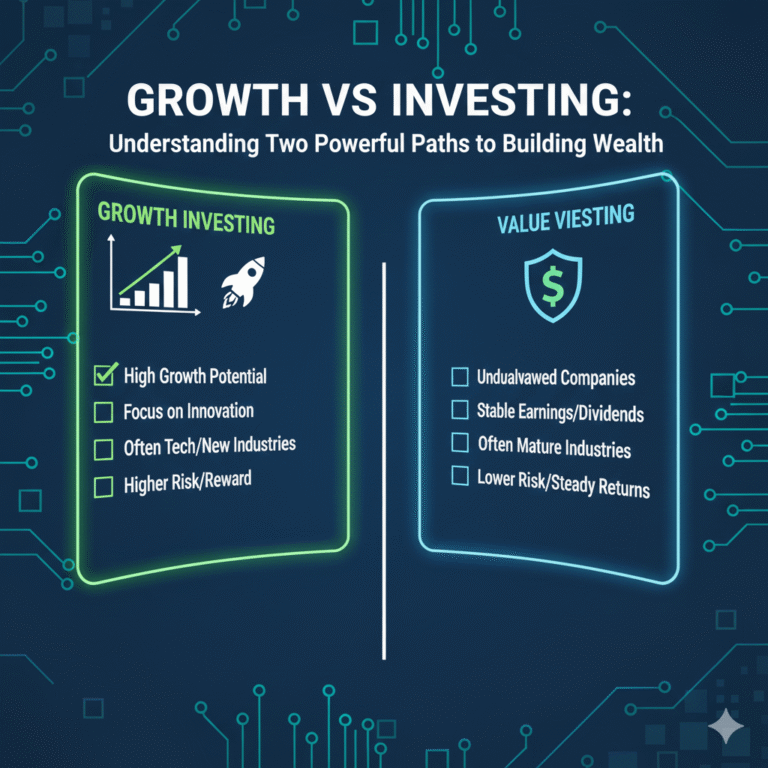
Growth stocks, whose value depends heavily on profits far in the future, tend to be more sensitive to rising rates. Value stocks, which generate cash flows sooner, are often less affected. This dynamic helps explain why inflationary periods often favor certain market styles over others.
Understanding this mechanism is essential when analyzing inflation vs stock market graph patterns across history.
Inflation’s impact on stock returns over time
Over long periods, stocks have generally outpaced inflation. However, this does not mean inflation is irrelevant. The real return on stocks depends on how earnings grow relative to price increases.
Periods of moderate inflation often coincide with healthy economic growth, which can support strong stock returns. Very high or volatile inflation, however, tends to hurt returns by increasing uncertainty and destabilizing costs.
Historical estimates show that inflation’s impact on stock returns varies widely depending on the inflation rate, economic conditions, and policy responses.
Winners: which stocks tend to benefit from inflation
Certain types of companies are better positioned to handle inflation. These firms often share common traits.
Businesses that sell essential goods and services, such as food, household items, or utilities, may maintain demand even as prices rise. Companies tied to commodities or real assets may also benefit, as the prices of goods they produce often increase with inflation.
Firms with pricing power stand out as inflation winners. When consumer prices rise, these companies can adjust prices without losing customers, preserving margins and earnings.
Best stocks for inflation and recession environments
Investors often look for the best stocks for inflation and recession when economic conditions become uncertain. These tend to be businesses with stable demand, strong balance sheets, and predictable cash flows.
Such companies may not deliver explosive growth, but they often provide resilience. During inflationary periods, resilience can be more valuable than rapid expansion.
Losers: which stocks struggle during inflation
Not all stocks fare well when inflation rises. Companies with high input costs and limited pricing power often struggle to protect margins. Businesses dependent on discretionary consumer spending may also suffer as household budgets tighten.
Growth stocks can be particularly vulnerable if inflation leads to higher interest rates. As discount rates rise, the value of distant earnings falls, pressuring valuations even if the underlying business remains sound.
Understanding these risks helps investors avoid sectors where inflation acts as a headwind rather than a tailwind.
How inflation affects stocks essay perspective: consumer behavior
From a consumer perspective, inflation changes spending patterns. As prices rise, households may reduce discretionary purchases and focus on essentials. This shift affects company revenues across different industries.
Consumer price statistics show how inflation affects categories differently. Food, housing, and household services often see upward contributions to inflation, while other categories fluctuate more. Companies exposed to these consumption segments experience varying impacts on earnings.
This behavioral element is a key part of any serious discussion of how inflation affects stocks essay analysis.
Inflation and taxes: combined effects on investors
Inflation does not act alone. Taxes and fees also influence stock returns. When inflation rises, nominal gains may increase, but real gains after taxes may shrink.
Investors often ask how do taxes affect stocks in inflationary environments. Higher inflation can push investors into higher tax brackets or increase taxable gains without improving real purchasing power. This interaction can reduce net returns even when stock prices rise.
Understanding the combined effect of taxes, fees, and inflation is essential for accurate long-term planning.
How inflation affects your investments at the portfolio level
At the portfolio level, inflation changes risk and return dynamics. Assets respond differently, and diversification becomes more important.
Some investors adjust allocations toward sectors that historically perform better during inflation. Others focus on maintaining balance across asset types to reduce volatility. The key is recognizing that inflation affects not just individual stocks, but the interaction between holdings.
This broader view explains how inflation affects your investments beyond isolated stock picks.
Inflation and official statistics: reading the data
Inflation data is published regularly through official statistics and national statistics notes. These reports include charts, figures, and time series datasets showing price movements over months and years.
Metrics such as CPI, CPIH, core CPI, and RPI help analysts understand where inflation pressures originate. Housing costs, food prices, and services often contribute differently to overall inflation.
For stock investors, understanding these data sources provides context for earnings trends and sector performance.
Inflation vs stock market graph interpretation
Graphs comparing inflation and stock market performance can be misleading without context. Short-term correlations may differ from long-term relationships.
In some periods, stocks rise alongside inflation due to strong economic growth. In others, inflation coincides with declining markets due to policy tightening or cost pressures.
Interpreting an inflation vs stock market graph requires understanding the underlying economic drivers rather than assuming a fixed relationship.
Is inflation good for stocks in the long run
The question is inflation good for stocks has no simple answer. Moderate inflation can support growth and pricing power, which may benefit stocks. High or unstable inflation tends to harm confidence and returns.
What matters most is predictability. Markets handle known inflation better than sudden spikes. Companies plan better, consumers adapt, and valuations adjust more smoothly.
Inflation’s impact on stock returns across sectors
Different sectors experience inflation differently. Goods-producing industries may benefit from rising prices if costs are manageable. Service-based businesses may face wage pressures that compress margins.
Financial firms are influenced by interest rate changes tied to inflation. Real estate-related companies may benefit from rising rents but face higher financing costs.
These sector differences explain why inflation reshapes market leadership over time.
How inflation affects stocks and shares during policy shifts
Central bank responses to inflation often shape stock performance. When inflation accelerates, policymakers may raise rates or tighten financial conditions.
These actions affect borrowing costs, investment decisions, and valuations. Stocks react not just to inflation itself, but to expectations about future policy moves.
Understanding this feedback loop is crucial for interpreting market behavior.
Long-term view: inflation and equity resilience
Despite short-term volatility, equities have historically shown resilience to inflation over long horizons. Businesses adapt, prices adjust, and earnings grow.
However, resilience is uneven. Selecting companies with durable competitive advantages and pricing power improves the odds of positive real returns.
This long-term perspective helps investors remain disciplined during inflationary cycles.
Conclusion: winners and losers in an inflationary world
How Inflation Affects Stocks depends on a mix of pricing power, cost structure, interest rates, and consumer behavior. Inflation creates clear winners and losers rather than moving markets uniformly.
Companies that can pass on costs, protect margins, and adapt to changing conditions tend to perform better. Firms with weak pricing power or heavy reliance on low rates often struggle.
By understanding inflation’s impact on stock returns, valuation, and sector dynamics, investors can make more informed decisions and position portfolios more thoughtfully during inflationary periods.